Sticky element for Elementor — pin any element to the top, bottom or side of the screen while its section stays in view.
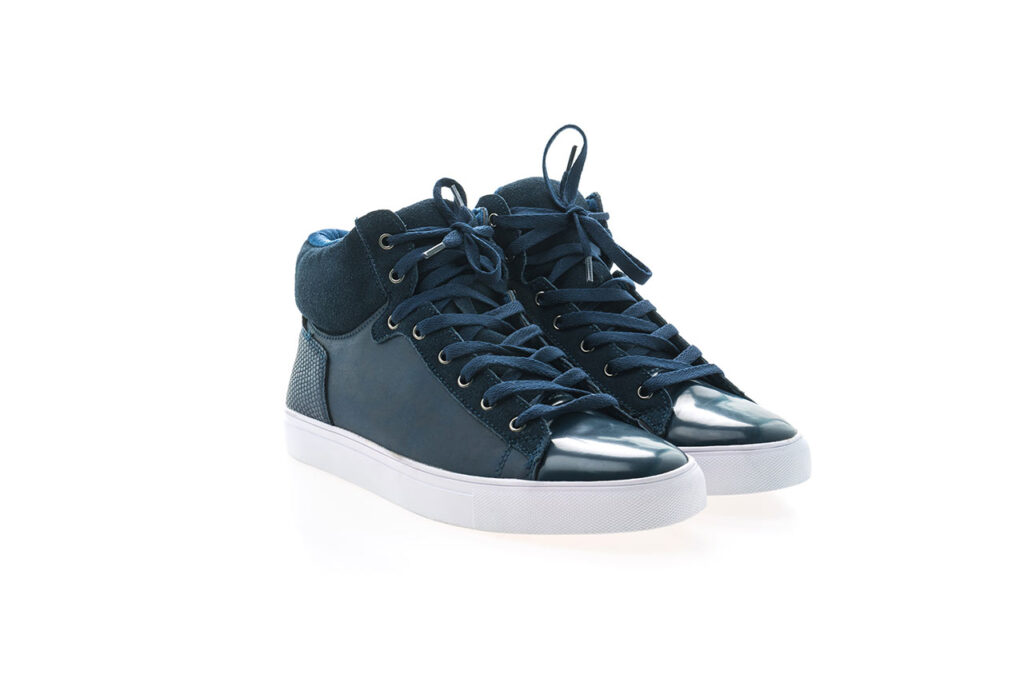
Nubuck from a tannery in São João da Madeira, a Margom cup sole that can be replaced twice, and a lining that stops being uncomfortable in about three days.
The nubuck is a 1.6mm full-grain hide, drum-dyed rather than surface-sprayed, so a scuff buffs out instead of going pale. It arrives stiff. Two weeks in it will have taken the shape of your foot and stopped looking new, which is the point.
A Margom cup sole, stitched and cemented, 9mm at the heel. It is the only part designed to be thrown away: our cobbler in Northampton replaces it for £68 and will do it twice before the upper gives up.
Vegetable-tanned calf through the heel and quarter, unlined at the vamp so the shoe can flex where your foot does. No foam, no mesh, nothing that compresses to nothing in a year.
A 4mm cork bed that takes an impression of your foot over the first fortnight. Replaceable, and included free with a resole.
Brush them. That is genuinely most of it. A horsehair brush after wear lifts the nap and keeps the colour even; wet weather wants twenty minutes on a shoe tree afterwards, away from a radiator.
Ships next working day. Order before 2pm and it usually goes the same afternoon.
We make less than most brands sell in a morning. That is not a virtue on its own — it just means we can afford to build a shoe that comes back to us twice rather than one that goes in a bin.
“Third year on mine. One resole, one recolour, and they look better than the day they turned up.”
The Harbour is built on a medium-width last. If you are between sizes, go down — the nubuck gives about half a size in the first fortnight and never comes back.
Half sizes are not made. If you are between, go down — the nubuck gives.
We publish the one- and two-star reviews too. Most of them are about the laces, which we have now changed.
“Wore them straight out of the box for a nine-hour shift and regretted nothing. The heel bit for two days and then stopped.”

“Second pair. First pair went back for a resole at eighteen months and came home looking like a different shoe.”

“Beautiful, and the colour has held up in rain. Docking a star because the laces are too short for a double knot.”

The Harbour is built on the Kelham last. If it has never quite worked for you, one of the other two probably will.
Widths are measured across the ball of the foot at the widest point, on a size 9.
Northampton, in a unit that used to be a school. You can visit on the first Friday of the month.
The hide is cut by hand, worst parts of the skin thrown away. About 40% of a hide never becomes a shoe.
Upper stitched, lining set, eyelets punched. Two days, one person, the same person throughout.
The upper is pulled over the last wet and left three days. This is where the shape actually happens.
Cup sole cemented and stitched. 9mm at the heel, and the only part meant to be replaced.
Edges burnished, footbed laid, laces threaded. Then somebody wears them round the workshop for an hour.
Trees in, tissue, one card with the name of everybody who touched them.
Anything not answered here goes to [email protected] and a human replies, usually the same day.
Wear them indoors for two evenings first. The vamp is unlined so it softens quickly, but the heel counter is stiff by design and needs a couple of short wears before a full day. If they are still biting after a week, send them back — that usually means the size is wrong, not the shoe.
£68, which is what our cobbler in Northampton charges us. Return postage both ways is on us, it takes about three weeks, and a new cork footbed is included. The upper can take two resoles before the stitch holes give up.
Yes. Sixty days, worn or unworn, as long as they are not damaged. We resell returns as B-grade at a discount and say plainly on that listing that someone else wore them first.
No, and be suspicious of nubuck that claims to be. They handle a rainy commute perfectly well; they are not a walking boot. Twenty minutes on a cedar tree afterwards, away from a radiator, and they will be fine.
14 November. That is a real date from the tannery, not a placeholder — if it moves we email everyone on the notify list the day we find out.
Both arrive together, return postage is paid, and you are only charged for the pair you keep.
One email when a restock arrives, one when a new colourway does. That is the entire mailing list — roughly nine emails a year.
Straight answers about what this one does, where it fits in a real build, and what it costs you to ship.
Read the documentation for this one, or write to us — a human answers inside a business day.
On the Layout tab for a container and the Advanced tab for a widget, with a matching Sticky section on the Style tab of both. Sky Addons for Elementor adds it to elements you already have — there is no sticky widget to drag in from the panel.
No. The moment it fixes, a placeholder of exactly the same size drops into its slot, so the surrounding layout keeps its spacing and nothing below it shifts up. The placeholder is removed again when the element unsticks.
No. The Sticky extension is in the free Sky Addons for Elementor plugin and needs no library at all — no GSAP and no stylesheet. If you do have Elementor Pro, avoid putting its own sticky on the same element, because the two will fight over the position.
Yes — Stick Until takes the CSS ID of the element where it should release, written without the hash. When that element reaches the sticky one it pushes it back out of the way. Leave the field empty and the element stays stuck to the bottom of the page.
Yes. The Sticky section on the Style tab sets a background, padding, border, border radius and box shadow that apply only in the stuck state, all as plain CSS. A transparent header gaining a solid background and a shadow the moment it pins is the usual use.
Yes, with Show on Scroll Up. The element hides while the visitor scrolls down and slides back in as soon as they scroll up. A separate Entrance Animation setting — Slide In, Fade In or None — plays each time the element becomes stuck.
Deliberately. Fixing an element inside the edit canvas would park it over the panel and make the page hard to work on, so the sticky behaviour is front-end only. Preview or view the page to check the offset, the release point and the stuck styling.
Put it in a flex container instead. The placeholder holding the element slot is a real element in the flow, so a container using CSS grid counts it as an extra cell and re-lays the tracks around it. A flex container absorbs the placeholder without changing the columns.
Yes — Stick To offers Top or Bottom, and Offset adds a gap of up to 300 pixels from that edge while stuck. Bottom is the right choice for a persistent add-to-cart bar or a booking strip that should sit at the foot of the screen.
Yes. Disable on Tablet and Disable on Mobile are separate switches, both off by default, so the element sticks everywhere until you change it. A tall sticky panel is usually worth disabling on phones, where it can eat most of a short viewport.
Elementor widgets and extensions by wowDevs — built for people who would rather ship than fight a page builder.
One short email when something ships. No drip sequence.