Parallax effects for Elementor with mouse and scroll movement, tuned for performance and responsive on every device.
Nine hours of viaducts, pine forest and coast on a line that has run since 1902. Window seats face east until the summit, west all the way down to the water.
07:12 arrives 16:05
14:40 arrives 23:33
19:05 sleeper, arrives 06:20
Drive it north to south and the light stays behind you the whole way. These are the three stops worth losing a morning over, and the stretch of road between them that nobody photographs.
The road runs level with the water for eleven kilometres. There is one passing place and one bench.
The middle valley has the only fuel between the two fjords, and the bakery beside it opens at six. Everything after that is single track with grass down the centre, so give the last hour more time than the map suggests.
Rain that arrives sideways, then twenty minutes of sun. A shell jacket, one warm layer and boots you can walk a wet path in will cover the entire week. Leave the tripod behind, the light does the work.
Twelve minutes from the layby, uphill on wet rock. Go early and you will have it to yourself.
Each picture holds still inside its own frame while the card travels, so the image arrives a beat before the words do.
No case back, no seam. The whole body is cut from one piece of steel and the movement drops in from the front, which is why the profile stays under nine millimetres.
One floor, one kettle, sixteen people who all end up standing around the same table by four in the afternoon. Scroll and the columns pull apart, then settle back level.
This page runs all four, and each one moves something different. They are independent of each other, so a section can drift while the picture inside it stays exactly where it is.
The section keeps its own photograph and lets it travel slower than the page, so the frame slides over a picture that is still catching up. The rail hero and the two field notes above are doing this.
Nothing to do with pictures. A whole block drifts at a rate you set, which is how two columns of one grid can arrive a beat apart and then settle level again.
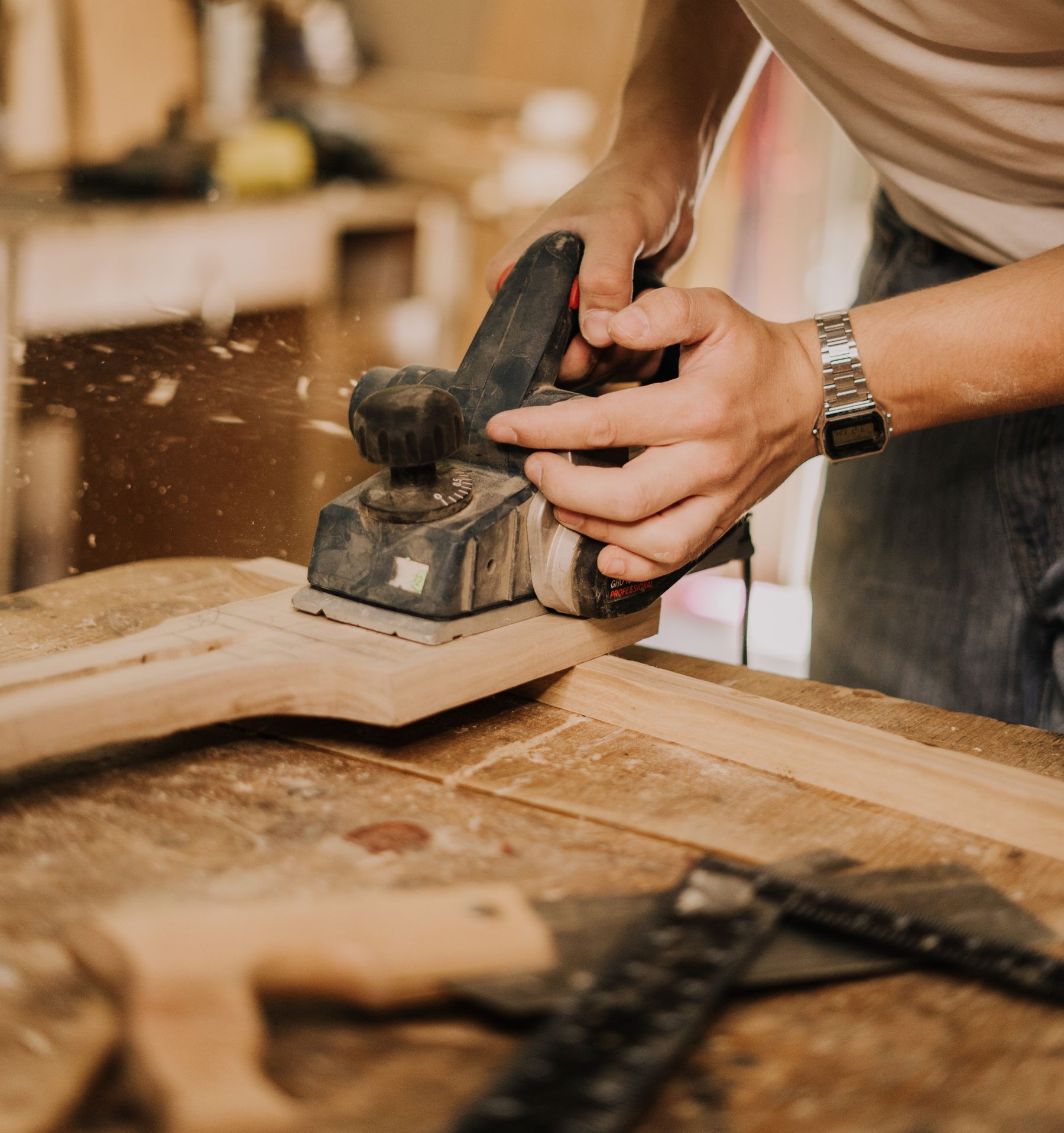
The frame does not move at all. Only the picture inside it does, running against a fixed edge. That is what the journal cards and the workshop photograph use.
Not scroll at all. The card leans toward the cursor and a warm highlight follows it across the face. A touch screen never sees it, by design.
Three of the four stand down on their own when a reader has reduced motion switched on in their system. Movement inside a frame is the exception, so that is the one to keep gentle.
Forty-one nights across twelve stages, counted at the gate rather than estimated from sales.
All four tiles hold the same picture of the same field. Only the travel changes, so the difference you see below is the setting and nothing else.
The picture holds its place while the method scrolls past it, then releases at the last step. Nothing about the photograph changes, only what is beside it.
Quartersawn beech, air dried four years, rejected if the end grain runs off more than five degrees. One board in six makes it through.
The mouth is opened to two millimetres and no wider. Everything the tool does afterwards depends on this one cut being square.
Ground at twenty-five degrees, honed at thirty, bedded so the whole back sits flat. It is checked with a straightedge under a lamp, not by feel.
Rasped, then scraped, then sanded through four grits. The final shape is set by hand against a template rather than by machine.
Three coats of hardwax oil, a day apart. The last thing that happens is a full-width shaving pulled off a piece of the same beech it was cut from.
The same treatment at full width. Give a picture more room and the travel has further to run, which is the whole argument for a wide frame.
Long read Straight answers about what this one does, where it fits in a real build, and what it costs you to ship.
Read the documentation for this one, or write to us — a human answers inside a business day.
Three do different jobs. Background Parallax moves a container background image or video behind content that holds still. Element Parallax moves the element itself as it crosses the viewport. Simple Parallax moves the images and video inside a widget within their own frame. Pick by what you want to see move.
None of them is a widget you drag in. In Sky Addons for Elementor, Background Parallax is a section on the Style tab of a Container, Element Parallax sits on the Advanced tab of containers and widgets alike, and Simple Parallax sits on the Advanced tab of any widget. You open something you already built and switch it on.
No. Every parallax effect here runs on free Elementor. Simple Parallax and the Tilt Effect are in the free Sky Addons plugin; Background Parallax and Element Parallax are Sky Addons Pro modules. Elementor Pro motion effects are neither required nor used.
Yes — Background Parallax accepts a YouTube link, a Vimeo link or a direct .mp4 URL and plays it behind the container content. The container own background image is used as the poster while the video loads, and the extra video library is only requested when a URL is actually filled in.
Yes, and on two of them it already is. Background Parallax and Element Parallax both carry Disable on Tablet and Disable on Mobile switches, with mobile switched off out of the box — mobile browsers resize the viewport when the address bar hides, which makes scroll-driven motion jump.
Eight: up, down, left, right and the four diagonals. That sits on top of five effects — Scroll, Zoom, Fade, Scroll plus Fade, and Zoom plus Fade — and a Speed slider from minus 1 to 2, where 1 pins the background to the scroll, 0 stops it and a negative value reverses it.

Background Parallax and Element Parallax do — both read the visitor prefers-reduced-motion setting and stay completely still when it is on. The Tilt Effect does the same and additionally never binds on touch-only devices. Simple Parallax, the image-level effect, does not currently check it.
No — it is driven by the cursor, not the scroll. The Sky Addons Tilt Effect tips an element in 3D toward the pointer on hover, with its own Max Tilt, Perspective and optional glare. Parallax is tied to scroll position, so the two can sit on one page doing different jobs.
Almost always a parent set to hide overflow. Element Parallax moves the element out of its resting position, so an ancestor container clipping its overflow crops the travel. Either allow overflow on that container, or lower the Intensity slider so the element stays inside the box.
The cost is per page and per effect. Background Parallax loads one small library and no GSAP at all; Element Parallax loads GSAP and ScrollTrigger, which Sky Addons Pro already shares with its other scroll modules; Simple Parallax loads its own. Nothing loads on a page where no element has the effect switched on.
Elementor widgets and extensions by wowDevs — built for people who would rather ship than fight a page builder.
One short email when something ships. No drip sequence.